
- Tech
- Shop




Blog
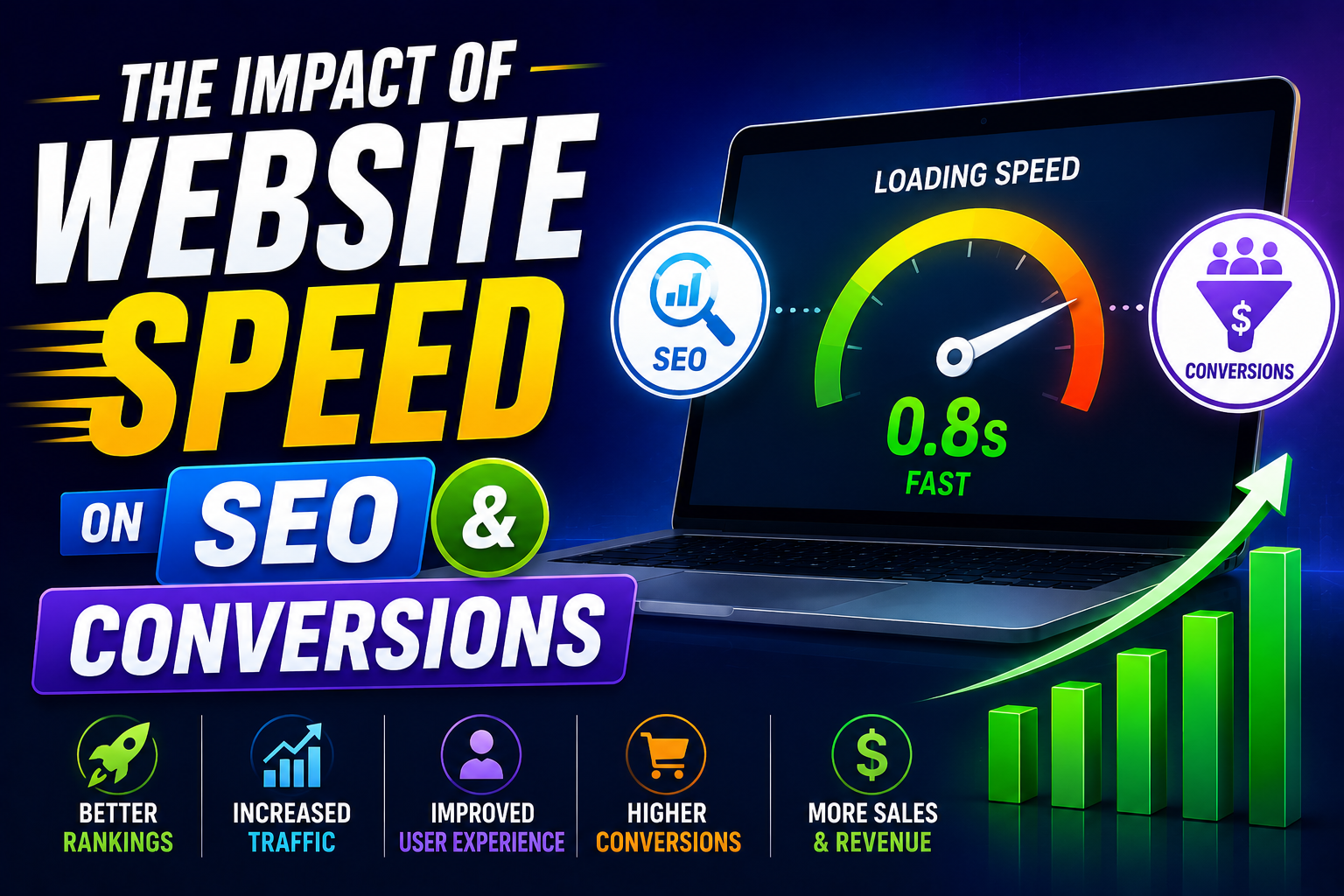
How Website Speed Affects SEO and Conversions
In today’s fast-paced digital world, website speed plays a critical role in online success. Modern users expect websites to load quickly, and search engines like Google prioritize fast-loading websites in search rankings. Even a few seconds of delay can negatively impact user experience, SEO performance, and business revenue.
Whether you run an eCommerce store, corporate website, blog, or service platform, website speed directly affects customer satisfaction, engagement, and conversions.
In this blog, we will explore how website speed impacts SEO and conversions, why it matters for businesses, and how you can improve website performance.
What Is Website Speed?
Website speed refers to how quickly a website loads and becomes fully interactive for users.
It includes:
- Page loading time
- Server response time
- Image loading speed
- Content rendering speed
- Mobile performance
A fast website provides a smoother and more enjoyable browsing experience.
Why Website Speed Matters
Users today have very little patience for slow websites. Research consistently shows that visitors leave websites if pages take too long to load.
A Fast Website Helps:
- Improve user experience
- Increase engagement
- Reduce bounce rates
- Improve SEO rankings
- Boost conversions and sales
- Build customer trust
Website speed is no longer optional — it is a major factor in digital success.
How Website Speed Affects SEO
Search engines aim to provide users with the best possible experience. Because of this, website speed has become an important ranking factor.
1. Faster Websites Rank Higher on Google
Google officially considers page speed as a ranking signal for both desktop and mobile search results.
Benefits of Faster Websites:
- Better search rankings
- Increased organic traffic
- Improved website visibility
- Higher crawl efficiency
A slow website may struggle to appear in top search results.
2. Improved User Experience Signals
Google tracks user behavior to evaluate website quality.
Important User Experience Metrics:
- Bounce rate
- Time spent on site
- Page engagement
- Core Web Vitals
If users leave quickly because of slow loading times, search engines may reduce your rankings.
3. Better Mobile SEO Performance
Mobile-first indexing means Google primarily evaluates the mobile version of your website.
Mobile Speed Matters Because:
- Most users browse on smartphones
- Mobile users expect instant loading
- Slow mobile sites lose traffic quickly
A fast mobile website improves both user experience and SEO performance.
4. Faster Crawling and Indexing
Search engine bots have limited resources for crawling websites.
Fast websites allow search engines to:
- Crawl more pages
- Index content faster
- Update search listings efficiently
Slow websites can limit crawl efficiency and affect visibility.
What Are Core Web Vitals?
Core Web Vitals are performance metrics introduced by Google to measure user experience.
Important Metrics Include:
Largest Contentful Paint (LCP)
Measures how quickly main content loads.
Ideal Time:
Under 2.5 seconds
First Input Delay (FID)
Measures website responsiveness when users interact.
Ideal Time:
Under 100 milliseconds
Cumulative Layout Shift (CLS)
Measures visual stability during loading.
Ideal Score:
Less than 0.1
Improving Core Web Vitals helps websites rank better and provide smoother experiences.
How Website Speed Affects Conversions
Website speed directly impacts revenue and customer behavior.
Even small delays can reduce sales and lead generation.
1. Faster Websites Increase Sales
Users are more likely to purchase products or services on fast websites.
Benefits Include:
- Faster checkout process
- Better shopping experience
- Reduced cart abandonment
- Higher customer satisfaction
A smooth experience encourages customers to complete transactions.
2. Lower Bounce Rates
Bounce rate refers to users leaving a website without interaction.
Slow Websites Cause:
- Frustration
- Poor user experience
- Lost customers
- Lower engagement
Fast websites keep users engaged longer.
3. Improved Customer Trust
Website speed affects how professional and trustworthy a business appears.
Fast Websites Feel:
- Reliable
- Secure
- Professional
- User-friendly
Users often associate slow websites with poor quality or outdated businesses.
4. Better Lead Generation
For service-based businesses, website speed affects inquiry forms, bookings, and contact submissions.
Faster Websites Help:
- Increase form submissions
- Improve booking rates
- Encourage user interaction
- Generate more leads
Speed optimization can directly improve conversion rates.
Common Causes of Slow Websites
Several factors can reduce website performance.
Common Issues Include:
- Large image sizes
- Poor hosting services
- Excessive plugins
- Unoptimized code
- Too many scripts
- Lack of caching
- Heavy animations
- Slow server response
Identifying these issues is the first step toward optimization.
How to Improve Website Speed
1. Optimize Images
Large image files slow down websites significantly.
Best Practices:
- Compress images
- Use modern formats like WebP
- Resize images properly
- Enable lazy loading
Optimized images improve loading times dramatically.
2. Use Fast Web Hosting
Quality hosting plays a major role in website performance.
Choose Hosting With:
- SSD storage
- High uptime
- Fast servers
- CDN support
- Scalability options
Reliable hosting improves overall speed and stability.
3. Enable Browser Caching
Caching stores website files temporarily on user devices.
Benefits:
- Faster repeat visits
- Reduced server load
- Improved performance
Caching significantly enhances user experience.
4. Minimize CSS, JavaScript, and HTML
Heavy code files slow down websites.
Optimization Techniques:
- Minify code
- Remove unused scripts
- Combine files
- Reduce redirects
Cleaner code improves performance.
5. Use a Content Delivery Network (CDN)
CDNs distribute website content across multiple global servers.
CDN Benefits:
- Faster global loading
- Reduced latency
- Improved reliability
- Better traffic handling
CDNs improve speed for users worldwide.
6. Optimize for Mobile Devices
Mobile optimization is essential for both SEO and conversions.
Mobile Optimization Includes:
- Responsive design
- Faster mobile loading
- Touch-friendly interfaces
- Reduced mobile scripts
A mobile-friendly website performs better in search rankings.
Website Speed and eCommerce Success
Website speed is especially important for eCommerce businesses.
Slow Online Stores Can Cause:
- Cart abandonment
- Lost revenue
- Reduced trust
- Lower customer retention
Fast-loading online stores improve shopping experiences and increase sales.
Future of Website Performance Optimization
Modern web technologies continue to focus on speed and performance.
Future Trends Include:
- AI-based optimization
- Edge computing
- Serverless hosting
- Advanced caching
- Progressive Web Apps (PWAs)
Businesses that prioritize speed will continue gaining competitive advantages.
Conclusion
Website speed is one of the most important factors affecting SEO, user experience, and conversions. A fast-loading website improves search rankings, increases engagement, builds trust, and boosts revenue.
In today’s competitive digital market, users expect instant access and smooth experiences across all devices. Businesses that invest in website speed optimization can achieve better visibility, stronger customer satisfaction, and higher conversion rates.
Improving website performance is not just a technical upgrade — it is a smart business investment for long-term digital success.
Related posts
Signs Your Business Needs a Website Redesign

How to Know When It’s Time to Upgrade Your Website for Better Growth and Performance
In today’s digital world, your website is often...
Responsive Web Design Explained: A Complete Guide
Why Responsive Design Is Essential for Modern Websites
In today’s digital world, users access websites through a wide variety of dev...
Website Maintenance: Why It Matters for Business Growth
The Importance of Regular Website Maintenance for Performance, Security, and Success
In today’s digital world, a business website is...
Choosing the Right Technology Stack for Your Business Project
How to Choose the Right Technology Stack for Your Project
Choosing the right technology stack is one of the most important decisions...
Top Benefits of Progressive Web Apps for Businesses
Benefits of Progressive Web Apps (PWAs)
In today’s digital landscape, businesses are constantly looking for faster, more efficient, ...

Common Website Security Errors Businesses Must Avoid
Common Website Security Mistakes and How to Avoid Them
In today’s digital world, website security is more important than ever. Busin...
The Impact of Website Speed on SEO and Conversions
How Website Speed Affects SEO and Conversions
In today’s fast-paced digital world, website speed plays a critical role in online suc...
Future of Web Development: Trends Businesses Must Follow
Top Web Development Trends Businesses Should Watch
In today’s fast-changing digital landscape, web development continues to evolve r...
Which Is Better: Custom Software or Off-the-Shelf Software?
Custom Software vs Off-the-Shelf Software: Which Is Better?
In today’s fast-paced digital world, software plays a critical role in b...

How Mobile Apps Increase Business Revenue
How Mobile Apps Help Businesses Increase Revenue
In today’s fast-growing digital economy, mobile applications have become one of the...
Mobile App Development Lifecycle Explained
Mobile App Development Process Explained
In today’s digital world, mobile applications have become an essential part of businesses, ...

Key Features Every Successful Mobile App Should Have
Key Features Every Successful Mobile App Should Have
In today’s competitive digital world, building a mobile app is easier than ever...